Actual screenshot from Amazon for a bunny hutch:

Full story here.
Note: The bunny hutch has now been discounted. It's now selling for hutch just $13.59

Actual screenshot from Amazon for a bunny hutch:

Milky Way 50 Percent Larger, Astronomers Discover
Total bullcrap. I went into a convenience store this evening. They're totally the same size.

Life in NC is a Del Shores play:
NC man shot by his stepfather ends up in same jail
JACKSONVILLE, N.C. – A man who police said was shot by his stepfather ended up in the same jail with him after officers discovered outstanding arrest warrants against the victim. Police told The Daily News of Jacksonville that 37-year-old Richard Hayes shot his stepson Thursday night.
Authorities say 21-year-old Michael Bass was holding a bloody towel to his abdomen when paramedics arrived, saying his stepfather shot him.
Deputies then discovered Bass had
for failing to appear in court and took him to jail after he was treated and released from the hospital. Police said Hayes told investigators he has a bad neck and shot his stepson because he thought Bass wanted to fight him.
The men remain in jail. It's unclear if they have attorneys.
The Office Of Legal Counsel is an important executive position. The OLC gives legal advice to the president and, by extension, the executive branch. Among other things, it informs the CIA and the Department of Interior what it judges to be permissible under the laws, and its opinions are binding.
Most people had never heard of the OLC before the Bush Administration. Then along came John Yoo, Bush's head of the OLC. Yoo, rather than presenting the law, used the office to find ways to skirt the law*. His so-called, now infamous, "torture memos" — which gave legal approval to waterboarding and other torture techniques – will go down in history as some of the most awkwardly strained legal reasoning ever put to paper.
Dawn Johnsen, Professor of Law at the Indiana University School of Law, had this to say about Yoo's memos:
"The Torture Opinion is an easy target for criticism, an extreme example of poor lawyering. A strong case can be made that the Opinion does not meet the professional standards that define any transactional attorney's ethical obligations in advising a client."
She added:
"That the President should premise his actions on the administration's best – and not merely plausible – interpretations of the relevant law is a relatively uncontroversial principle, at least as a theoretical matter. (…) Measured by this standard, the Torture Opinion utterly fails."
Johnsen believed not just that the torture memos were badly argued, but that many of the interrogation practices they licensed are in fact illegal:
"The Torture Opinion focuses exclusively on just one statutory prohibition, which could give the impression that interrogations that fall just short of the Opinion's narrow interpretation of torture are not unlawful. In fact, several other laws further prohibit coercive forms of interrogation that would fail to meet even a broad definition of torture. The soldiers who committed the Abu Ghraib abuses, for example, were subject not only to the limits of the federal anti-torture statute, but also to far more extensive restrictions contained in the Uniform Code of Military Justice (UCMJ), most notably prohibitions against cruelty, oppression, or maltreatment of a detainee. The anti-torture statute itself implements a treaty that prohibits "cruel, inhuman and degrading treatment." A final example: Common Article 3 of the Geneva Conventions goes far beyond torture and prohibits "violence to life and person, in particular murder of all kinds, mutilation, cruel treatment and torture," and "outrages upon personal dignity, in particular humiliating and degrading treatment." At the time of the Torture Opinion's issuance, violations of Common Article 3 were punishable war crimes under federal law."
And finally, this is what she had to say on the Bush Administration's (mis)use of the OLC in general:
"The proposition that the President's own legal advisors can provide an effective constraint on unlawful action understandably engenders a high degree of skepticism – especially in light of recent events. One of President Bush's legacies undoubtedly will be the deepening of Americans' cynicism about presidential adherence to the rule of law. The Bush Administration, however, also provides some evidence to the contrary, for example, in the resistance to advice given by the U.S. Department of Justice's Office of Legal Counsel (OLC) regarding torture from lawyers and other advisors elsewhere in the executive branch and later from within OLC itself. Internal checks alone, of course, are insufficient. But we debase our commitment to democracy and justice if we do not view legal advice from within the executive branch as an essential component of efforts to safeguard civil liberties, the constitutional allocation of governmental authority, and the rule of law. We invite failure if we allow our cynicism to excuse presidential abuses as simply expected – in effect relieving Presidents (and those who serve them) of their obligation to take care that the laws be faithfully executed, as the U.S. Constitution commands."
Yes, yes, yes. Exactly.
Why do I bring this up? Because Obama has appointed the author of these fine observations, Dawn Johnsen, to the post of Assistant Attorney General for the Office of Legal Counsel.
***********************************
* Interesting thing about Bush's law-men, John Yoo and John Bolton. After years of advocating unbridled executive power, they suddenly think that presidential power should be limited, and Congress and the Court should act as a guiding counterbalances.
Bolton and Yoo believe — get this — the president should have less authority and discretion when it comes to international affairs.
The Constitution's Treaty Clause has long been seen, rightly, as a bulwark against presidential inclinations to lock the United States into unwise foreign commitments. The clause will likely be tested by Barack Obama's administration, as the new president and Secretary of State-designate Hillary Clinton, led by the legal academics in whose circles they have long traveled, contemplate binding down American power and interests in a dense web of treaties and international bureaucracies.
Like past presidents, Mr. Obama will likely be tempted to avoid the requirement that treaties must be approved by two-thirds of the Senate…. By insisting on the proper constitutional process for treaty-making, Republicans can join Mr. Obama in advancing a bipartisan foreign policy. They can also help strike the proper balance between the legislative and executive branches that so many have called for in recent years.
Steve Benen comments:
Reading this, I had to double check to make sure we were talking about the same Bolton and Yoo. After all, John Yoo has spent most of the last eight years arguing that the president has an unfettered power to do as he pleases on the international stage. Indeed, Yoo argued that the president can literally ignore any law he chooses — including the Constitution — if he decides it's in the nation's interests.
But that was then. Now Yoo is worried about executive overreach. Now Yoo wants every letter of the Constitution to be respected and adhered to without exception…
I wonder why the change of position….
Oh, riiight….
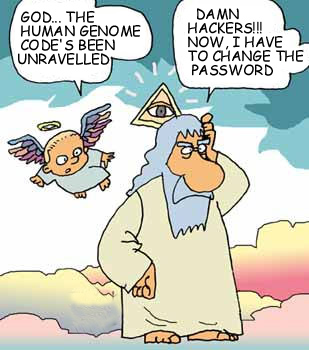 Richard Dawkins wonders: We've mapped the entire human genome; we've mapped the entire chimpanzee genome. We know they are 98% identical (sorry, evolution opponents). It shouldn't be hard, therefore, to literally create some sort of interspecies. Another "missing link". Lucy the Second, not from the archeological ground, but from the laboratory.
It would, he speculates, change the nature of the discussion on abortion. Pro-lifers insist that a single human cell — the zygote (which preceeds the embryo) – is sacred because it is human. Therefore, in their view, destroying it is destroying a human which is "murder".
But what if the zygote is 50% human, 50% chimp? What about 70/30? 95/5? 99.999/0.001?
It is a thought experiment (although it could be done in reality) which really forces the issue of "what is human".

The top 500 worst passwords of all time, not considering character case. If you use any of these, you better change it, because a hacker can easily write a program to feed this in and get at your… whatever.
| NO | Top 1-100 | Top 101–200 | Top 201–300 | Top 301–400 | Top 401–500 |
| 1 | 123456 | porsche | firebird | prince | rosebud |
| 2 | password | guitar | butter | beach | jaguar |
| 3 | 12345678 | chelsea | united | amateur | great |
| 4 | 1234 | black | turtle | 7777777 | cool |
| 5 | pussy | diamond | steelers | muffin | cooper |
| 6 | 12345 | nascar | tiffany | redsox | 1313 |
| 7 | dragon | jackson | zxcvbn | star | scorpio |
| 8 | qwerty | cameron | tomcat | testing | mountain |
| 9 | 696969 | 654321 | golf | shannon | madison |
| 10 | mustang | computer | bond007 | murphy | 987654 |
| 11 | letmein | amanda | bear | frank | brazil |
| 12 | baseball | wizard | tiger | hannah | lauren |
| 13 | master | xxxxxxxx | doctor | dave | japan |
| 14 | michael | money | gateway | eagle1 | naked |
| 15 | football | phoenix | gators | 11111 | squirt |
| 16 | shadow | mickey | angel | mother | stars |
| 17 | monkey | bailey | junior | nathan | apple |
| 18 | abc123 | knight | thx1138 | raiders | alexis |
| 19 | pass | iceman | porno | steve | aaaa |
| 20 | fuckme | tigers | badboy | forever | bonnie |
| 21 | 6969 | purple | debbie | angela | peaches |
| 22 | jordan | andrea | spider | viper | jasmine |
| 23 | harley | horny | melissa | ou812 | kevin |
| 24 | ranger | dakota | booger | jake | matt |
| 25 | iwantu | aaaaaa | 1212 | lovers | qwertyui |
| 26 | jennifer | player | flyers | suckit | danielle |
| 27 | hunter | sunshine | fish | gregory | beaver |
| 28 | fuck | morgan | porn | buddy | 4321 |
| 29 | 2000 | starwars | matrix | whatever | 4128 |
| 30 | test | boomer | teens | young | runner |
| 31 | batman | cowboys | scooby | nicholas | swimming |
| 32 | trustno1 | edward | jason | lucky | dolphin |
| 33 | thomas | charles | walter | helpme | gordon |
| 34 | tigger | girls | cumshot | jackie | casper |
| 35 | robert | booboo | boston | monica | stupid |
| 36 | access | coffee | braves | midnight | shit |
| 37 | love | xxxxxx | yankee | college | saturn |
| 38 | buster | bulldog | lover | baby | gemini |
| 39 | 1234567 | ncc1701 | barney | cunt | apples |
| 40 | soccer | rabbit | victor | brian | august |
| 41 | hockey | peanut | tucker | mark | 3333 |
| 42 | killer | john | princess | startrek | canada |
| 43 | george | johnny | mercedes | sierra | blazer |
| 44 | sexy | gandalf | 5150 | leather | cumming |
| 45 | andrew | spanky | doggie | 232323 | hunting |
| 46 | charlie | winter | zzzzzz | 4444 | kitty |
| 47 | superman | brandy | gunner | beavis | rainbow |
| 48 | asshole | compaq | horney | bigcock | 112233 |
| 49 | fuckyou | carlos | bubba | happy | arthur |
| 50 | dallas | tennis | 2112 | sophie | cream |
| 51 | jessica | james | fred | ladies | calvin |
| 52 | panties | mike | johnson | naughty | shaved |
| 53 | pepper | brandon | xxxxx | giants | surfer |
| 54 | 1111 | fender | tits | booty | samson |
| 55 | austin | anthony | member | blonde | kelly |
| 56 | william | blowme | boobs | fucked | paul |
| 57 | daniel | ferrari | donald | golden | mine |
| 58 | golfer | cookie | bigdaddy | 0 | king |
| 59 | summer | chicken | bronco | fire | racing |
| 60 | heather | maverick | penis | sandra | 5555 |
| 61 | hammer | chicago | voyager | pookie | eagle |
| 62 | yankees | joseph | rangers | packers | hentai |
| 63 | joshua | diablo | birdie | einstein | newyork |
| 64 | maggie | sexsex | trouble | dolphins | little |
| 65 | biteme | hardcore | white | 0 | redwings |
| 66 | enter | 666666 | topgun | chevy | smith |
| 67 | ashley | willie | bigtits | winston | sticky |
| 68 | thunder | welcome | bitches | warrior | cocacola |
| 69 | cowboy | chris | green | sammy | animal |
| 70 | silver | panther | super | slut | broncos |
| 71 | richard | yamaha | qazwsx | 8675309 | private |
| 72 | fucker | justin | magic | zxcvbnm | skippy |
| 73 | orange | banana | lakers | nipples | marvin |
| 74 | merlin | driver | rachel | power | blondes |
| 75 | michelle | marine | slayer | victoria | enjoy |
| 76 | corvette | angels | scott | asdfgh | girl |
| 77 | bigdog | fishing | 2222 | vagina | apollo |
| 78 | cheese | david | asdf | toyota | parker |
| 79 | matthew | maddog | video | travis | qwert |
| 80 | 121212 | hooters | london | hotdog | time |
| 81 | patrick | wilson | 7777 | paris | sydney |
| 82 | martin | butthead | marlboro | rock | women |
| 83 | freedom | dennis | srinivas | xxxx | voodoo |
| 84 | ginger | fucking | internet | extreme | magnum |
| 85 | blowjob | captain | action | redskins | juice |
| 86 | nicole | bigdick | carter | erotic | abgrtyu |
| 87 | sparky | chester | jasper | dirty | 777777 |
| 88 | yellow | smokey | monster | ford | dreams |
| 89 | camaro | xavier | teresa | freddy | maxwell |
| 90 | secret | steven | jeremy | arsenal | music |
| 91 | dick | viking | 11111111 | access14 | rush2112 |
| 92 | falcon | snoopy | bill | wolf | russia |
| 93 | taylor | blue | crystal | nipple | scorpion |
| 94 | 111111 | eagles | peter | iloveyou | rebecca |
| 95 | 131313 | winner | pussies | alex | tester |
| 96 | 123123 | samantha | cock | florida | mistress |
| 97 | bitch | house | beer | eric | phantom |
| 98 | hello | miller | rocket | legend | billy |
| 99 | scooter | flower | theman | movie | 6666 |
| 100 | please | jack | oliver | success | albert |
From Whatmypass
By the way, I think No. 371 is pretty good. But apparently, so do did a lot of others.
And what's with the foul language? Honestly!
Yeah, I know. You're happy about this:
President-elect Barack Obama plans to include about $300 billion in tax cuts for workers and businesses in his economic recovery program, advisers said Sunday, as his team seeks to win over Congressional skeptics worried that he was too focused on government spending.
But you shouldn't be.
Listen, your economic problems are (or will be, if it hasn't effected you yet) a direct consequence of the nation's economic problems. So the best way to help you in the long run is to help the national economy.
There are, in theory, two ways to get the life blood of the economy going. One is government spending. The other is tax cuts.
I'm overgeneralizing here, but typically, Democrats prefer government spending; Republicans prefer tax cuts.
The problem with tax cuts — giving money back to the people — is this: doing so doesn't necessarily help the economy. This is explained, somewhat tongue-in-cheek, by this exchange from The West Wing:
Donna (secretarial assistant), as she and Josh (her boss and Asst. Chief of Staff) walk down a White House hallway: "We have a $32 billion budget surplus for the first time in three decades. The Republicans in Congress want to use this money for tax relief, right?"
Josh: "Yes"
Donna: "Essentially what they're saying is we want to give back the money. Why don't we want to give back the money?"
Josh: "Because we're Democrats."
Donna: "But it's not the government's money."
Josh: "Sure it is. It's right there in our bank accounts."
Donna: "That's only because we collected more money than we ended up needing."
Josh: "Isn't it great?"
Donna: "I want my money back."
Josh: "Sorry."
Later, they pick up the argument:
Donna: "What's wrong with me getting my money back?"
Josh: "You won't spend it right."
Donna: "What do you mean?"
Josh: "Let's say your cut of the surplus is $700. I want to take your money, combine it with everybody else's money, and use it to pay down the debt and further endow Social Security. What do you want to do with it?"
Donna: "Buy a DVD player."
Josh: "See."
Donna: "But my $700 is helping employ the people who manufacture and sell DVD players, not to mention the people who manufacture and sell DVDs. It's the natural evolution of the market economy."
Josh: "The problem is the DVD player you buy might be manufactured in Japan."
Donna: "I'll buy an American one."
Josh: "We don't trust you."
Donna: "Why not?"
Josh: "We're Democrats."
Donna, exasperated: "I want my money back."
Josh, snickering: "You shouldn't have voted for us."
The West Wing touched upon this again the following season. Here Chief of Staff Leo McGarry is having a discussion with Charlie, President Bartlet's young personal aide. Charlie has just completed his tax return and finds out that he owes money (he was expecting a refund). The reason he owes money is because of a tax "rebate" that the government bestowed the prior year — a "rebate" intended to stimulate the economy:
LEO: Did you spend it?
CHARLIE: I paid my VISA bill.
LEO: We would have preferred it if you'd ate in a restaurant or travelled.
CHARLIE: Me too.
LEO: Well, in any event… [puts out his hand]
CHARLIE: What? [Leo starts wiggling his fingers] Oh, what are you – the collector?
PRESIDENT BARTLET [sticking his head in the doorway]: Leo.
LEO [to Barlet]: He used the rebate to pay off his VISA bill.
CHARLIE: It wasn't a rebate; it was an advance.
BARTLET [to Charlie]: A trip to Banana Republic would have killed you?
Those exchanges highlight the problem of tax cuts, rebates, etc. They don't necessarily do what the Republicans hope. Many people will use their tax cut to pay down their debt and bills, or, plop the money into their savings account, or, if they spend it, it may be on something foreign which doesn't stimulate the national economy (much).
On the other hand, government spending pumps money into the economy, and 100% of it goes there.
It's not that tax cuts are bad. Americans paying down their debt, for example, is good. Even buying foreign products pumps some money into our economy. But you getting a bigger bang-for-the-buck, economically speaking, with government spending (assuming the money is spent in America). An infrastructure program (here in the United States, not in Iraq) will benefit American workers, small businesses, and other businesses which thrive off of those workers and businesses. It is a direct rippling effect.
Everybody knows this — even Republicans — but Republicans are catering to what appeals to individual Americans the most (tax breaks, tax breaks, tax breaks), instead of doing what is necessarily the best, most responsible, thing for the country. (The reason, a cynic like me would suggest, is because tax breaks will get them elected, which is more important to Republican politicians than doing what is best for the country).
So why Is Obama now proposing tax cuts? Well, he did promise them in his campaign. However, these particular tax cuts are beyond what was promised. These tax cuts are a one-time economic stimulus to get us out the hole we're in.
The problem I'm having is that Obama's two-year economic stimulus package is 40% tax cuts(!) and 60% government spending. Why is so much of that devoted to tax cuts?
There are probably two reasons to consider.
The first reason, which makes more sense, is that government spending is slow. We need an economic stimulus now, and there are a finite number of "shovel-ready" projects on which to spend money. Even if you use some government spanding for aid to the distressed (unempolyment benefits, etc.), it's still not going to give the economy the immediate kickstart which is needed.
But the second reason — the one most of the media is going with (see the blocked quote up top) – is that Obama is trying to placate Republicans so they won't grouse about the government spending. You know, the whole partisanship thing. I'm not sure why this is necessary; after all, Obama won. Democrats won. We don't have to placate. (We don't have to be pricks either; there is probably a middle ground).
I'm hoping that the Obama economic team is operating under the first reasoning, and the "playing nice" with the GOP is just their front. Because if we start trying to please congressional Republicans, we're never going to succeed, and nothing will get done.
UPDATE: Robert Reich seems to be climbing on board. That says something good for the plan, I guess.
A look at George Bush in 2000. And get your anti-ironic tablets, because what he says here is 100% right. Unfortunately, it has nothing to do with what he did as President.
Offical announcement is tomorrow. Chalk up another Democratic win, making the Senate an almost filibuster-proof majority.


From Ironic:
An old man turned ninety-eight. He won the lottery and died the next day.
Well, close. The guy, Donald Peters of Connecticut, was 79, and died the day he bought the tickets:
Peters bought two Connecticut Lottery tickets at a local 7-Eleven store on Nov. 1 as part of a 20-year tradition he shared with his wife Charlotte. Later that day, the 79-year-old retired hat factory worker suffered a fatal heart attack while working in his yard in Danbury.
On Friday, his widow cashed in one of the tickets: a $10 million winner which, in her grief over her husband's death, she had put aside and almost discarded before recently checking the numbers.
I think that falls under the dictionary definition of "bittersweet".
The weekend in the world that I didn't pay attention to.
Interesting discussions (here and here) over at Mother Jones regarding films depicting historical events. Just how much liberty with the historical facts will viewers tolerate? Or does anyone care?